
OTTAWA — Prime Minister Justin Trudeau says he spoke to Donald Trump Monday night after the president-elect shared plans to use his first day in office to slap 25 percent tariffs on Canada.
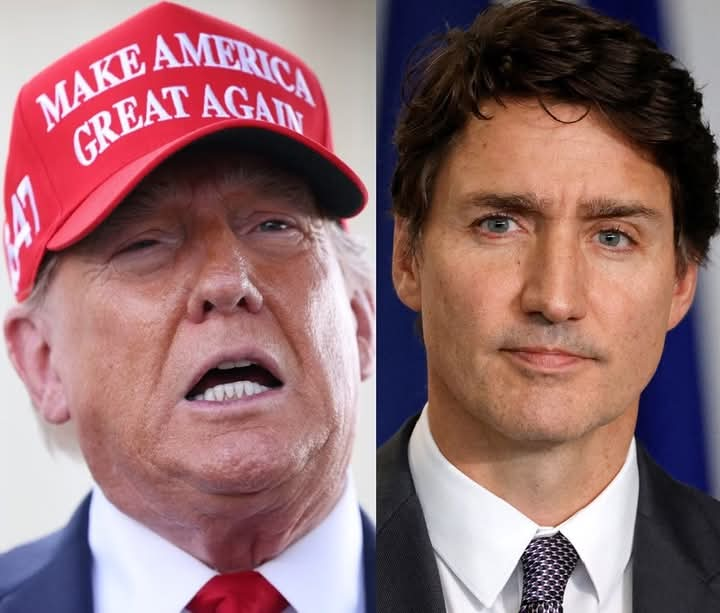
“It was a good call,” Trudeau said this morning on Parliament Hill. “We obviously talked about laying out the facts, talking about how the intense and effective connections between our two countries flow back and forth
Last night on Truth Social, Trump shared his first-day priorities.
“As everyone is aware, thousands of people are pouring through Mexico and Canada, bringing Crime and Drugs at levels never seen before,” Trump wrote.
“On January 20th, as one of my many first Executive Orders, I will sign all necessary documents to charge Mexico and Canada a 25% Tariff on ALL products coming into the United States, and its ridiculous Open Borders.”
In a recent address that has sent shockwaves through both Canadian and American political landscapes, Prime Minister Justin Trudeau took a bold stance against former President Donald Trump’s latest tariff announcements.
Trudeau’s remarks come at a time when trade relations between the two neighboring countries are particularly sensitive, and his decision to publicly criticize Trump underscores the growing tensions that have characterized U.S.-Canada relations since Trump took office in 2017.
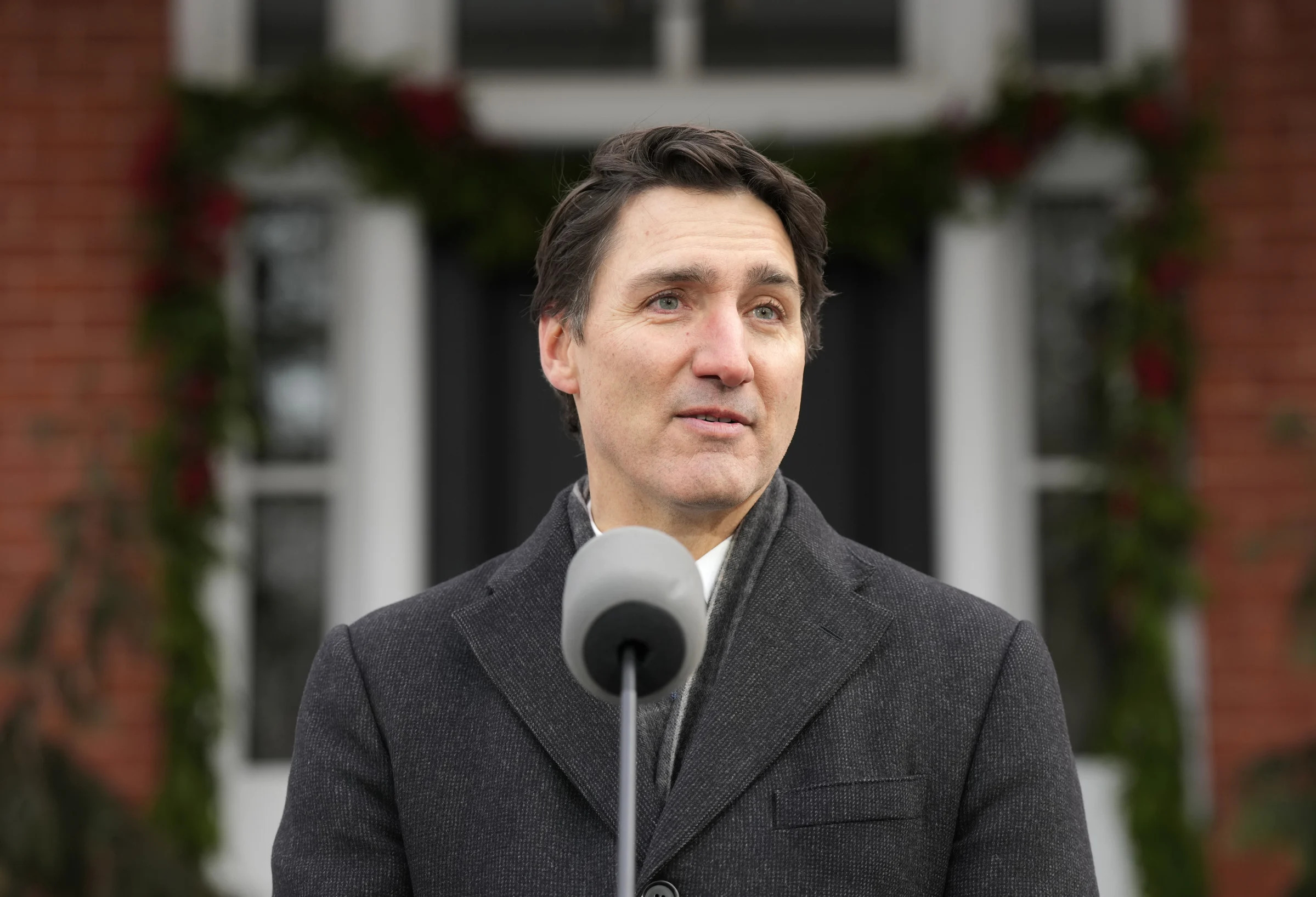
Trudeau’s speech, delivered at a press conference in Ottawa, was marked by a passionate defense of free trade and economic cooperation between Canada and the United States.
He referred to Trump’s proposed tariffs on Canadian goods as “a very dumb thing to do,” emphasizing the detrimental effects such measures could have on both nations.
The Prime Minister’s comments resonated with many Canadians, who have grown weary of the unpredictability that has characterized U.S. trade policy under Trump’s presidency.
The backdrop of Trudeau’s speech is significant. The United States and Canada share one of the world’s largest trading relationships, with billions of dollars exchanged daily in goods and services.
Tariffs, particularly on key exports such as aluminum and steel, could disrupt this delicate balance, leading to increased prices for consumers and potential job losses in both countries.
Trudeau highlighted these concerns, arguing that Trump’s tariffs would not only hurt Canadian industries but would also backfire on American workers who depend on affordable imports.
Trudeau’s remarks also reflect a broader sentiment among Canadian politicians and citizens alike.
Many Canadians view Trump’s trade policies as erratic and counterproductive, leading to uncertainty in markets that thrive on stability and predictability.
The Prime Minister’s strong words were not just a critique of Trump’s policies but also a rallying cry for the importance of collaboration and mutual respect between neighbors.
He emphasized the need for dialogue and negotiation rather than confrontation, suggesting that both nations should work together to address trade challenges instead of resorting to punitive measures.
The Prime Minister also took the opportunity to remind Canadians of the historical context of U.S.-Canada trade relations.
He pointed out that the two countries have long benefited from a cooperative approach, and that the North American Free Trade Agreement (NAFTA), which was renegotiated into the United States-Mexico-Canada Agreement (USMCA) under Trump, was a testament to the importance of partnership.
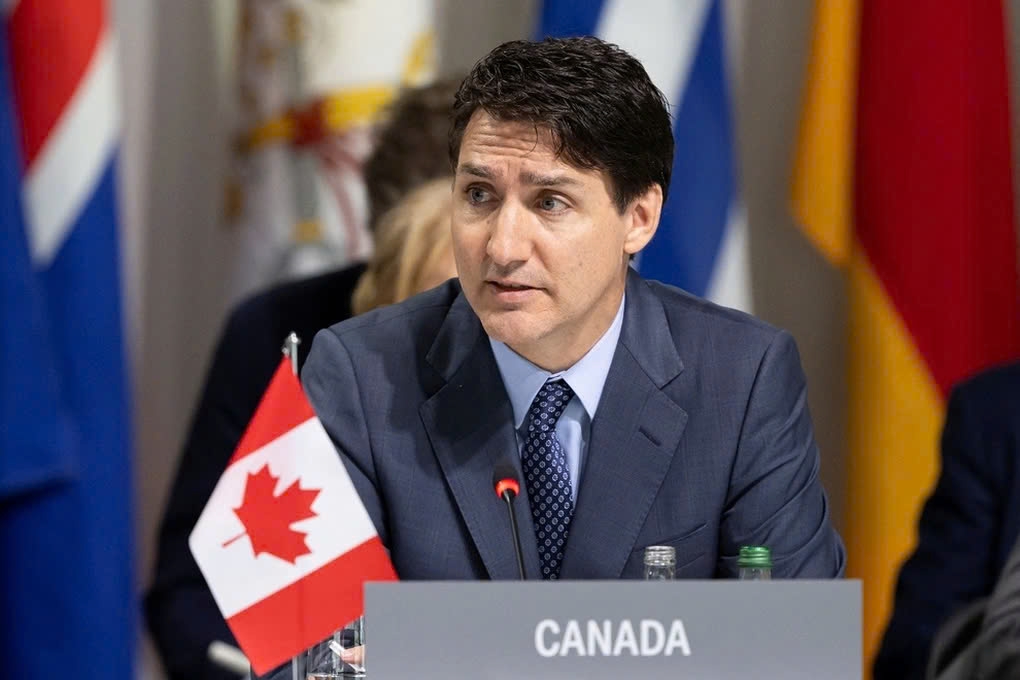
Trudeau argued that Trump’s tariffs risk unraveling decades of progress in trade relations, potentially leading to a trade war that could have severe repercussions for both economies.
In addition to addressing the economic implications of Trump’s tariffs, Trudeau’s speech also touched on the broader ideological divide between the two leaders.
While Trudeau champions a progressive agenda that includes environmental sustainability and social equity, Trump’s policies have often prioritized short-term economic gains, frequently at the expense of long-term global cooperation.
Trudeau’s critique highlighted this contrast, positioning Canada as a leader in advocating for a more inclusive and sustainable approach to trade and economic policy.
The response to Trudeau’s speech was swift and varied. While many Canadians expressed support for their Prime Minister’s stance, there were also voices of dissent.
Some critics argued that Trudeau’s comments could escalate tensions further and that a more diplomatic approach would be beneficial.
However, many supporters felt that Trudeau’s direct confrontation of Trump’s policies was necessary to protect Canadian interests.
This divide underscores the complexity of international relations and the challenges leaders face when navigating the often turbulent waters of global trade politics.
As the speech circulated on social media and news outlets, it sparked a renewed debate about the future of U.S.-Canada relations.
Analysts noted that Trudeau’s strong rhetoric could galvanize support among Canadians who are increasingly frustrated with Trump’s unpredictable policies.
At the same time, it raises questions about how the Biden administration, which is expected to take office soon, will approach trade relations with Canada. Will there be a return to a more collaborative approach, or will the tensions of the Trump era linger on?
Trudeau’s speech also highlighted the importance of solidarity among allies in the face of protectionist policies.
He called for a united front among nations that share similar values and economic interests, emphasizing that cooperation is essential for addressing global challenges such as climate change and economic inequality.
The Prime Minister’s appeal for unity was particularly timely, as countries around the world grapple with the impacts of the COVID-19 pandemic and the need for collective action to rebuild economies.
In the aftermath of Trudeau’s address, it remains to be seen how the U.S. will respond to his criticisms and whether Trump will double down on his tariff proposals or reconsider them in light of potential backlash from allies.
The stakes are high, as both Canada and the U.S. navigate a complex web of economic interdependence.
Trudeau’s speech serves as a reminder that strong leadership often requires standing firm against policies that threaten the well-being of one’s own country, even when it means taking on powerful figures like Trump.
Looking ahead, the implications of Trudeau’s speech extend beyond immediate trade relations.
It signals a potential shift in how Canadian leaders may approach diplomacy and international relations in an era marked by populism and nationalism.
Trudeau’s willingness to confront Trump directly could embolden other leaders facing similar challenges, fostering a renewed commitment to multilateralism and cooperative governance.
In conclusion, Justin Trudeau’s historic speech against Donald Trump’s tariffs was more than just a critique of a single policy; it was a clarion call for the importance of collaboration, respect, and shared values in international trade.
As Canada and the United States continue to navigate their complex relationship, Trudeau’s words resonate as a reminder of the potential consequences of divisive policies and the need for leaders to prioritize the long-term interests of their nations over short-term gains.
The future of U.S.-Canada relations remains uncertain, but for now, Trudeau’s strong stance marks a significant moment in the ongoing dialogue between two nations that share a deep and intertwined history.
News

BREAKING: Lily Collins’ EMOTIONAL 36th Birthday—‘First as a Mama!’ Shares RARE Photos of Baby Tove & Husband Charlie!
Lily Collins celebrated her ‘first birthday as a mama’ as she turned 36 on Tuesday – and shared sweet family snaps…

BREAKING: White Lotus Star Alexandra Daddario TURNS HEADS at Australian Grand Prix—VIP Photos LEAKED
Alexandra Daddario flaunted her luxurious life at the Formula One Grand Prix in Melbourne. The White Lotus star, 39, was pictured on the grid…

I’m Convinced Alexandra Daddario Is The Perfect Casting Choice To Play Wonder Woman In James Gunn’s DCU
Alexandra Daddario has all the needed elements to bring Wonder Woman to life in the new DC Universe and make her performance as memorable…

Zoe Saldaña Says Oscars Rejecting ‘Avatar’ Acting Is ‘Quite Deflating’: ‘You’re Overlooked and Then Minimized and Completely Disregarded’
Zoe Saldaña, the acclaimed actress known for her roles in blockbuster franchises like Avatar and Guardians of the Galaxy, has never been one…

BREAKING: Zoe Saldaña’s FORGOTTEN Ballet Movie DESTROYS Her Oscar Role—Fans SCREAM ‘This Is Her REAL Masterpiece!’
Emilia Pérez is not the first time Zoe Saldaña has danced on screen, and her ballet performance in Center Stage showcased her musical…

BREAKING: Pixar’s NEW Movie Trailer LEAKED—Starring Oscar-Winning SUPERSTAR! Fans SCREAM ‘BEST ANIMATION EVER!’
After winning the Oscar for Best Supporting Actress for her performance in Emilia Pérez, Zoe Saldaña’s next movie will be the Pixar sci-fi movie Elio….
End of content
No more pages to load